
A new safety standard
Published by Callum O'Reilly,
Senior Editor
Tanks and Terminals,
Industrial tank cleaning has long been recognised as one of the most dangerous maintenance operations in the process industry. Whether in storage terminals, refineries, wastewater plants, or chemical facilities, cleaning and remediation tasks inside tanks, pits, or confined spaces expose workers to numerous hazards – toxic vapours, explosive atmospheres, and the physical constraints of narrow environments.
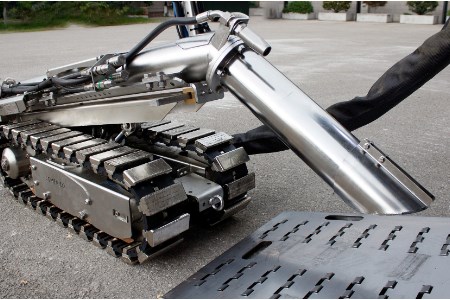
Over the last decade, technological innovation has transformed this scenario. The emergence of no-man entry robotic systems – remotely operated vehicles (ROVs) designed to perform cleaning, suction, and removal of solid or liquid residues without direct human entry – has enabled a fundamental shift in how industrial maintenance is approached.
The Italian UNI/PdR 177:2025 provides a structured, practical framework for adopting these technologies safely and consistently. Developed under the coordination of the Italian Organisation for Standardisation (UNI) and the Italian Association for Trenchless Technologies (IATT), it introduces the first comprehensive guidelines in Europe specifically focused on robotic maintenance in confined and explosive environments.
Filling a regulatory gap
Before the publication of UNI/PdR 177:2025, the tank cleaning and industrial maintenance sector lacked a unified standard for defining, classifying, and managing no-man entry robotic technologies. While European directives such as ATEX 2014/34/EU and Machinery Regulation (EU) 2023/1230 set general safety requirements for equipment used in potentially explosive atmospheres, they did not address the specific characteristics of remote-controlled robotic systems.
This absence led to inconsistencies in how operators selected, deployed, and documented the use of robots for confined-space operations. Some relied on internal procedures, others on guidelines from equipment manufacturers or international associations such as the American Petroleum Institute (API) and Occupational Safety and Health Administration (OSHA).
UNI/PdR 177:2025 fills this gap by offering a shared technical language and operational framework for engineers, health, safety, and environment (HSE) managers, contractors, and plant operators. It standardises the terminology and defines key concepts – from system classification to jobsite configuration – ensuring that robotic interventions are planned and executed according to verifiable and repeatable criteria....
Written by Alessandro Gerotto, Alberto Feletto, Daniel Devò, and Edoardo Marangoni, Gerotto Federico Srl.
This article was originally published in the Spring 2026 issue of Tanks & Terminals magazine. To read the full article, sign in or register for free.
For more information about Gerotto Federico Srl, click here.
Read the article online at: https://www.tanksterminals.com/special-reports/27032026/a-new-safety-standard/
You might also like

Hydrocarbon Engineering Podcast
Peter Davidson, CEO of the Tank Storage Association (TSA), joins us to discuss the essential role that the tank storage sector has to play in ensuring supply security and resilience, as well as in facilitating the energy transition.

ABB extends automation and electrical scope for Rio Grande LNG Trains 4 and 5
ABB has been awarded additional orders by Bechtel, extending its scope to deliver integrated automation and electrical solutions for Trains 4 and 5 of the Rio Grande LNG facility in the US.